הכשרת התלמידים כאזרחי רשתPreparing Students to Be Digital CitizensFormar al alumnado como ciudadanos digitales
מאתByPorורד פריאנטה קורלנדרVered Pariente KurlenderVered Pariente Kurlenderפורסם לראשונהFirst publishedPublicado por primera vez2015
בשנים האחרונות אנו עדים למהפך בכל הקשור לדומיננטיות של אוריינות המדיה ושל האוריינות הדיגיטלית בעולמנו ובמיוחד בעולמם של הצעירים. חלקו המכריע של הצעירים מקדיש זמן מועט ביותר בקריאת רומנים ועיתונים מודפסים ויותר זמן בצפייה בסרטים, קריאת מגזינים ובצפייה במידע ברשתות החברתיות ובאינטרנט.
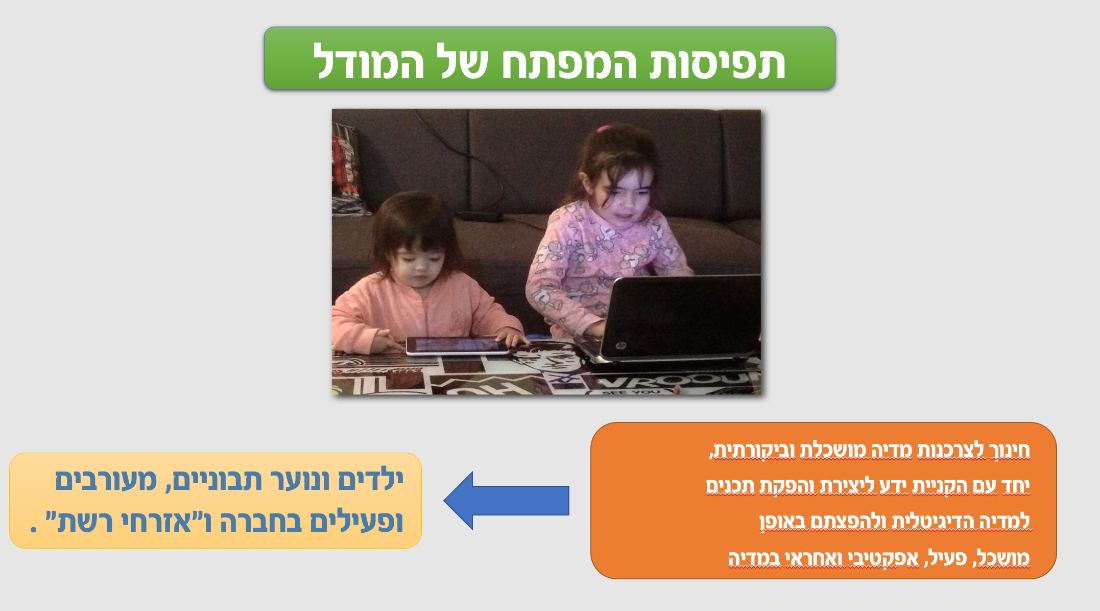
מציאות זו חיזקה בקרבנו את ההבנה שיש ללמד אוריינות תקשורת ומדיה באופן מסודר ושיטתי הן כיצרני מדיה והן כצרכני מדיה. תוך הענקת כלים ביקורתיים לפיענוח ולהבנת השפה הכתובה השפה האודיו-ויזואלית והחיבור ביניהם. מתוך הבנת משמעויות השינוי, גיבשנו תכנית חדשנית לתלמידי יסודי עד לכיתה יב׳ כאשר מטרת התכנית היא להפוך את בוגריה, לצרכני תקשורת ומדיה, תבוניים, מושכלים וביקורתיים מצד אחד ולמפיקי ויצרני תוכן ומשתפי ומפיצי תוכן ומידע באופן מושכל וזהיר, מצד שני.
בעידן זה אמצעי הצריכה המובילים בכל הסוגים: וידאו, אודיו, סטילס וטקסט אחד הם. ברצוננו לספק את הכלים התיאורטיים והמעשיים, הטובים והעכשוויים בתחום, בעזרתם יוכלו התלמידים להתפתח בתחום זה ואף להשתלב בשוק המקצועי מתוך ההבנה שמי שיצליח להתפרנס בעולם הזה יהיה מי שיצליח להסתגל לעולם החדש, לדבר את השפה שלו וללמוד מהר כמו הטכנולוגיה.
סביבת התקשורת שאנו חיים בה נעשית מורכבת יותר ויותר וחשוב להכשיר את התלמידים כאזרחים מודעים וביקורתיים, העושים שימוש מושכל ויצירתי בעולם התקשורת והמידע העומד לרשותם (דמות הבוגר במאה ה–21, משרד החינוך). אוריינות מדיה מקנה מיומנויות נדרשות במאה ה-21 כפי שפירטתי לעיל, ועונה על מטרות הלמידה המשמעותית בחינוך אזרחי־דמוקרטי ובאוריינות דיגיטלית. היא יוצרת הקשרים לאקטואליה בקרב התלמידים, והם מסוגלים לצרוך, להפיק וליצור, לשתף ולהפיץ תוכן באופן תבוני וביקורתי באמצעי המדיה. אוריינות מדיה, על ידי צרכנות נבונה וביקורתית של התקשורת, תסייע להם בגיבוש עמדות וערכים מנחים לחיים, לזהוּת ולשייכות.
מטרות התכנית
להרחיב את ההישגים, המוטיבציה והשוויון בהוראה אצל המורים והתלמידים גם יחד.
להבין את החשיבות והצורך של המתבגר באוטונומיה בלקיחת החלטות ואחריות במשימות.
לעזור למתבגר להתמודד ולקחת אחריות בעזרת מעורבות חברתית, ובכך להכיר עצמו טוב יותר.
להכיר את האינדיבידואציה של המתבגר כדי לעזור לו להגדיר את עצמו.
ללמד נושאים רלוונטיים ללומד.
לתת לגיטימיות לידע הטכנולוגי של התלמידים.
לעודד הבעת דעה ביקורתית.
למקד אחריות על הלמידה: מעורבות התלמידים בתכנון, בניהול ובהערכת הלמידה.
להתדיין עם תלמידים נוספים כדי לבחון רעיונות חדשים.
להכשיר את המורים והתלמידים במיומנויות מקצועיות.
בתי הספר בהתמחות ניו מדיה (2013–2015)
ורד הייתה שותפה לכתיבת תכנית הלימודים בניו מדיה של משרד החינוך, והנחתה את צוותי ההוראה בבתי הספר שהשתתפו בהתמחות:
אורט ע״ש נעמי שמר, גן יבנה
ביה״ס גמנסיה אפריים קציר, חולון
בית ספר המקיף ע״ש גרינברג, קריית טבעון
בית ספר עירוני ע״ש פנחס אילון, חולון
בית ספר תיכון מקיף אלפארוק, כסייפה
הרב תחומי פתח תקווה ב׳
הרב תחומי שחקים, נהריה
מקיף רבין, באר שבע
קריית חינוך ע״ש יגאל אלון, ראשון לציון
In recent years we have witnessed a revolution in the dominance of media literacy and digital literacy in our world, and especially in the world of young people. The vast majority of young people spend very little time reading novels and printed newspapers, and far more time watching films, reading magazines and viewing information on social networks and the internet.
This reality reinforced our understanding that media and communication literacy must be taught in an orderly and systematic way, both to media producers and to media consumers, while providing critical tools for decoding and understanding written language, audiovisual language and the connection between them. Understanding the significance of this change, we developed an innovative program for students from elementary school through 12th grade. The program's aim is to turn its graduates into thoughtful, informed and critical consumers of media and communication on the one hand, and into producers and creators of content who share and distribute content and information sensibly and carefully on the other.
In this era, the leading means of consumption of every kind – video, audio, still images and text – have become one. We want to provide the best and most up-to-date theoretical and practical tools in the field, with which students can develop in this area and even enter the professional market, based on the understanding that those who will succeed in making a living in this world are those who manage to adapt to the new world, speak its language and learn as fast as technology does.
The media environment we live in is becoming increasingly complex, and it is important to prepare students to be aware and critical citizens who make sensible and creative use of the world of media and information available to them (Profile of the 21st-Century Graduate, Ministry of Education). Media literacy imparts the skills required in the 21st century, as detailed above, and meets the goals of meaningful learning in civic-democratic education and digital literacy. It creates connections to current affairs among students, enabling them to consume, produce and create, share and distribute content through the media in a thoughtful and critical way. Through wise and critical media consumption, media literacy will help them form attitudes and guiding values for life, identity and belonging.
Program Goals
To expand achievement, motivation and equity in teaching for teachers and students alike.
To understand the importance of, and the adolescent's need for, autonomy in decision-making and responsibility for tasks.
To help adolescents cope and take responsibility through social involvement, and thereby get to know themselves better.
To recognize the adolescent's individuation in order to help them define themselves.
To teach topics that are relevant to the learner.
To give legitimacy to students' technological knowledge.
To encourage the expression of critical opinions.
To focus responsibility for learning: involving students in planning, managing and assessing their learning.
To engage in discussion with other students in order to explore new ideas.
To train teachers and students in professional skills.
Schools in the New Media Specialization (2013–2015)
Vered co-authored the Ministry of Education's New Media curriculum and mentored the teaching teams at the schools that took part in the specialization:
ORT Naomi Shemer School, Gan Yavne
Ephraim Katzir Gymnasium School, Holon
Greenberg Comprehensive School, Kiryat Tiv'on
Pinchas Eilon Municipal School, Holon
Al-Farouk Comprehensive High School, Kuseife
Petah Tikva B Multidisciplinary School
Shehakim Multidisciplinary School, Nahariya
Rabin Comprehensive School, Be'er Sheva
Yigal Allon Educational Campus, Rishon LeZion
En los últimos años asistimos a una auténtica revolución en lo que respecta al peso de la alfabetización mediática y de la alfabetización digital en nuestro mundo y, sobre todo, en el mundo de los jóvenes. La inmensa mayoría de los jóvenes dedica muy poco tiempo a leer novelas y periódicos impresos, y mucho más a ver películas, leer revistas y consumir información en las redes sociales y en internet.
Esta realidad reforzó nuestra convicción de que la alfabetización mediática y comunicativa debe enseñarse de forma ordenada y sistemática, tanto a los productores como a los consumidores de medios, proporcionando herramientas críticas para descifrar y comprender el lenguaje escrito, el lenguaje audiovisual y la relación entre ambos. Conscientes del alcance de este cambio, elaboramos un programa innovador para el alumnado desde primaria hasta 12.º curso. El objetivo del programa es que sus egresados sean, por un lado, consumidores de medios y comunicación reflexivos, informados y críticos y, por otro, productores y creadores de contenidos que compartan y difundan contenidos e información de forma sensata y prudente.
En esta era, los principales medios de consumo de todo tipo –vídeo, audio, imagen fija y texto– se han fusionado en uno solo. Queremos ofrecer las mejores y más actuales herramientas teóricas y prácticas del ámbito, con las que el alumnado pueda desarrollarse en este campo e incluso incorporarse al mercado profesional, partiendo de la idea de que quien logre ganarse la vida en este mundo será quien consiga adaptarse al nuevo entorno, hablar su lenguaje y aprender tan rápido como la tecnología.
El entorno mediático en el que vivimos es cada vez más complejo, y es importante formar al alumnado como ciudadanos conscientes y críticos, que hagan un uso sensato y creativo del mundo de la comunicación y la información que tienen a su alcance (Perfil del egresado en el siglo XXI, Ministerio de Educación). La alfabetización mediática proporciona las competencias necesarias en el siglo XXI, tal como he detallado, y responde a los objetivos del aprendizaje significativo en la educación cívico-democrática y en la alfabetización digital. Conecta al alumnado con la actualidad y le permite consumir, producir y crear, compartir y difundir contenidos a través de los medios de forma reflexiva y crítica. Mediante un consumo sensato y crítico de los medios, la alfabetización mediática les ayudará a formar actitudes y valores que orienten su vida, su identidad y su sentido de pertenencia.
Objetivos del programa
Ampliar el rendimiento, la motivación y la equidad en la enseñanza, tanto en el profesorado como en el alumnado.
Comprender la importancia y la necesidad que tiene el adolescente de autonomía en la toma de decisiones y de responsabilidad en las tareas.
Ayudar al adolescente a afrontar retos y asumir responsabilidades mediante el compromiso social, y así conocerse mejor.
Conocer el proceso de individuación del adolescente para ayudarle a definirse.
Enseñar temas relevantes para quien aprende.
Dar legitimidad a los conocimientos tecnológicos del alumnado.
Fomentar la expresión de opiniones críticas.
Centrar la responsabilidad sobre el aprendizaje: implicación del alumnado en la planificación, la gestión y la evaluación del aprendizaje.
Debatir con otros estudiantes para explorar nuevas ideas.
Formar al profesorado y al alumnado en competencias profesionales.
Centros de la especialidad de New Media (2013–2015)
Vered participó en la redacción del currículo de New Media del Ministerio de Educación y asesoró a los equipos docentes de los centros que participaron en la especialidad: